12 Oct 2026
Read Story →
STORY
AAI 2026: AMD Hadirkan Komputasi Full-Stack untuk Era Agentic AI
By Experiential & Activation Team
23 Jul 2026
5 Min Read
SAN FRANCISCO – 23 Juli 2026 – AMD (NASDAQ: AMD) hari ini meluncurkan
portofolio infrastruktur AI generasi berikutnya dan physical AI di Advancing AI
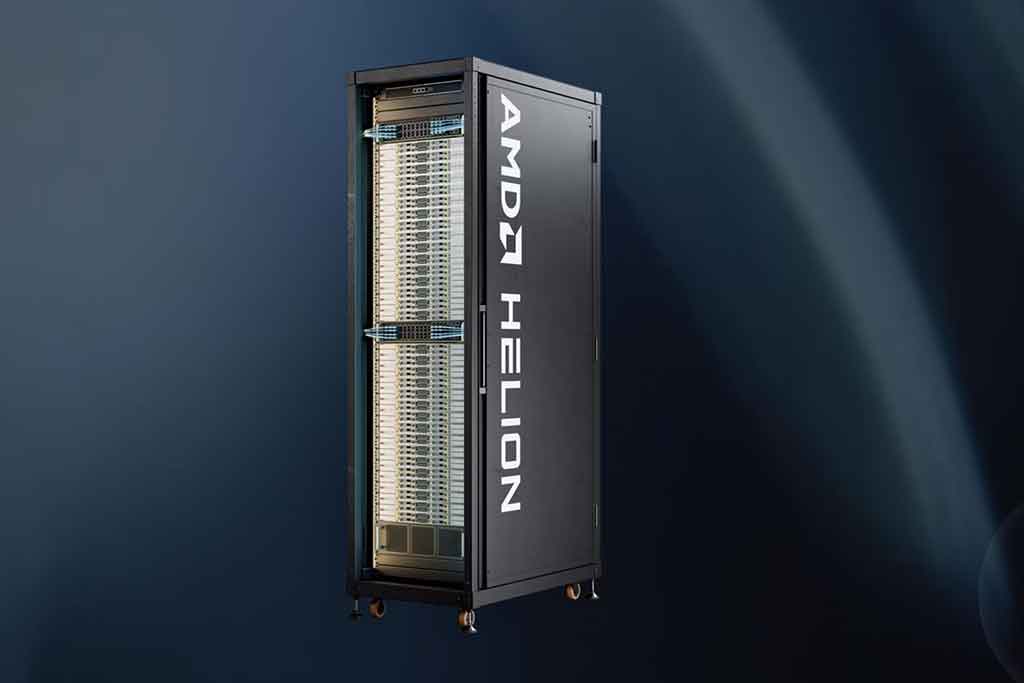
2026, dipimpin oleh solusi rack-scale AMD Helios yang kini telah memasuki
produksi dan akan diterapkan oleh perusahaan AI terkemuka dalam skala gigawatt.
Seiring AI berkembang dari
pelatihan menuju inferensi dan beban kerja agentic, permintaan komputasi
meningkat dengan cepat. AMD menghadirkan platform AI terbuka dan full-stack
yang memberikan fleksibilitas kepada pelanggan untuk menerapkan komputasi yang
tepat bagi setiap beban kerja.
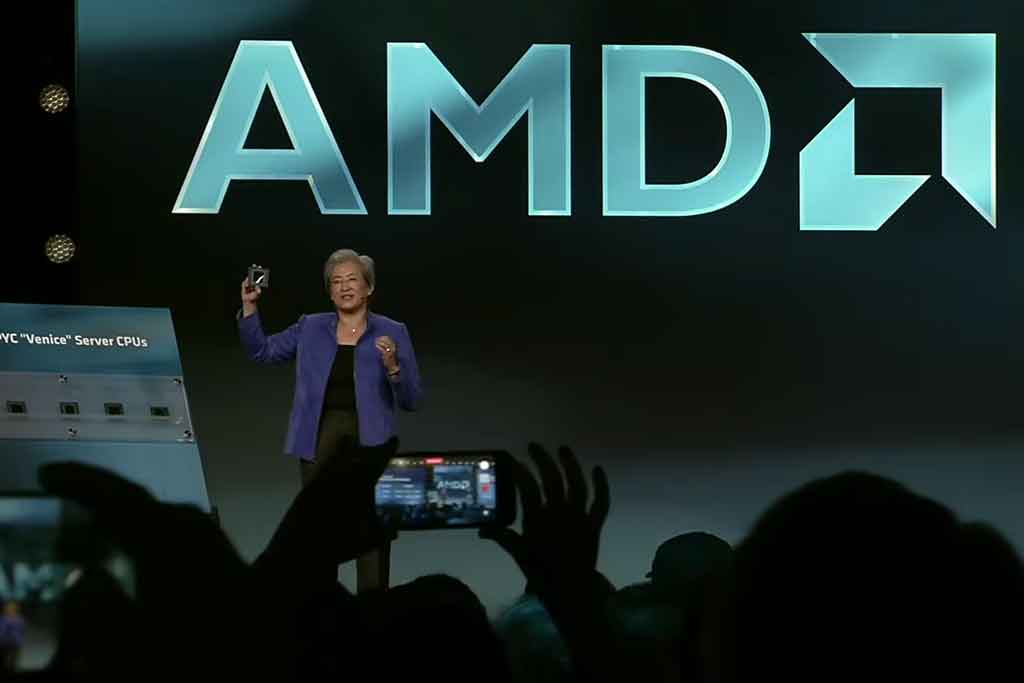
“Fase AI berikutnya akan
mencakup frontier models, agents, dan physical AI, sehingga menciptakan peluang
baru untuk menghadirkan kecerdasan di mana saja,” ujar Dr. Lisa Su, Chair dan
CEO AMD. “Untuk mewujudkan potensi tersebut, seluruh industri perlu bekerja
sama. AMD bermitra di seluruh ekosistem untuk menghadirkan komputasi terdepan
dan platform terbuka yang memberi pelanggan performa, fleksibilitas, dan
pilihan untuk menskalakan AI dari data center hingga edge.”
AMD Helios: Solusi AI
Rack-Scale dengan Performa Tertinggi
Menghadirkan frontier AI
membutuhkan arsitektur rak yang terintegrasi penuh, dengan setiap bagian dari
stack mendorong batas performa. Solusi rack-scale AMD Helios dirancang untuk kebutuhan ini, dengan silikon
yang dioptimalkan bersama, mencakup 72 GPU AMD Instinct™ MI455X berkinerja
tinggi dan 18 CPU AMD EPYC™ “Venice” Generasi Keenam yang bertenaga, terhubung
melalui jaringan front-end, scale-up, dan scale-out AMD Pensando™, serta
dipercepat oleh software terbuka AMD ROCm™. AMD Helios menggabungkan performa
komputasi terdepan, kapasitas memori, dan bandwidth jaringan untuk menghadirkan
hingga 30% lebih banyak token per dolar dibandingkan solusi kompetitor
terdepan.
Laboratorium AI dan penyedia
cloud terkemuka memilih AMD Helios karena performa full-stack dan
keterbukaannya. Selain itu juga mencakup OpenAI, Anthropic, Meta, Microsoft,
Oracle, HUMAIN, Tensorwave, Vultr, Cirrascale, dan lainnya. Sistem akan
tersedia dari OEM terkemuka, termasuk Bull, HPE, Lenovo, dan Supermicro, serta
mitra infrastruktur Sanmina dan Wiwynn.
Dalam acara Advancing AI,
para mitra AMD menjelaskan bagaimana mereka menerapkan infrastruktur AI AMD
dalam skala besar untuk pelatihan frontier dan inferensi:
• Anthropic dan AMD
menjabarkan lebih lanjut pengumuman kemitraan strategis pada hari Rabu untuk
menerapkan GPU AMD Instinct MI455X hingga 2 gigawatt dalam solusi rack-scale
AMD Helios. Kedua perusahaan memulai kolaborasi engineering multiyear untuk
menggunakan Claude guna mempercepat pengembangan software AMD. Secara khusus,
tim akan menggunakan Claude untuk mengoptimalkan beban kerja pada GPU AMD
Instinct dan mempercepat pengembangan software ROCm. AMD juga akan mengadopsi
Claude secara luas di seluruh tim engineering dan pengembangan produknya.
• OpenAI dan AMD bermitra
untuk mengoptimalkan seluruh AI stack, dari silikon hingga software. Dengan
memanfaatkan framework Triton milik OpenAI bersama software AMD ROCm, kedua
perusahaan mengoptimalkan beban kerja kelas GPT pada GPU AMD Instinct MI455X
dan rak AMD Helios. OpenAI memperkirakan mulai mengoperasikan Helios pada
kuartal keempat 2026, dengan penerapan yang meningkat sepanjang 2027.
• Meta dan AMD melakukan
co-design untuk penerapan skala gigawatt, dengan mengoptimalkan full AI compute
stack AMD bagi beban kerja Meta. Meta kini memvalidasi platform CPU EPYC
Generasi Keenam di laboratoriumnya dan telah mulai menguji serta memvalidasi
beban kerja pada rak AMD Helios sebagai persiapan untuk penerapan berskala
besar.
• Cerebras dan AMD berkolaborasi
menghadirkan solusi gabungan komputasi AI ultra-low-latency Cerebras dan
infrastruktur rack-scale high-throughput AMD Helios untuk membantu meningkatkan
efisiensi, skalabilitas, dan keekonomian inferensi bagi layanan inferensi
ultra-low-latency.
Menghadirkan CPU dan GPU Data
Center dengan Performa Tertinggi
Prosesor EPYC Generasi Keenam
menghadirkan portofolio CPU server terluas untuk agentic AI,2 yang mencakup
beban kerja cloud, enterprise, general-purpose, dan high-performance computing
(HPC). Dengan performa per core yang terdepan dan kepadatan thread tertinggi,3
prosesor ini memungkinkan jumlah agent terbanyak per watt, per dolar, dan per
rak.4,5,6 Untuk AI host node, CPU EPYC Generasi Keenam menghadirkan kecepatan dan bandwidth memori
yang dibutuhkan agar accelerator terus memperoleh pasokan data secara penuh.
Untuk server general-purpose, prosesor ini menghadirkan performa dan efisiensi
energi terdepan guna menjalankan aplikasi business-critical serta tugas
pendukung AI.
Dengan GPU AMD Instinct™ MI400 Series, AMD menghadirkan performa tinggi untuk beban
kerja cloud, enterprise, dan HPC. GPU AMD Instinct MI455X menghadirkan
throughput token 34 kali lebih tinggi dibandingkan GPU MI355X.7 Untuk beban
kerja presisi tinggi, accelerator AMD Instinct™ MI430X merupakan solusi paling
canggih untuk HPC dan sovereign AI, dengan performa FP64 berbasis hardware
hingga 288 TFLOPS untuk komputasi ilmiah. Accelerator Instinct MI430X mendukung
gelombang berikutnya dari superkomputer kelas exascale di Amerika Serikat dan
Eropa.
AMD juga meluncurkan GPU
Instinct MI350P, yang menghadirkan akselerasi AI secara mulus pada
infrastruktur yang ada dengan keekonomian token terdepan. GPU MI350P
menghadirkan hingga 4,2 kali lebih banyak token per detik per dolar
dibandingkan kompetitor.8
Memajukan Ekosistem Open
Software
Bagi developer, AMD ROCm adalah platform software terbuka yang menyediakan performa, fleksibilitas, dan dukungan ekosistem yang diperlukan untuk membangun serta menerapkan AI pada hardware AMD. Berlandaskan fondasi tersebut, AMD memperkenalkan ROCm.ai, sebuah platform pengembangan berbasis AI yang membantu developer membangun, mengoptimalkan, dan menerapkan software GPU dengan lebih cepat di seluruh platform AMD. ROCm.ai menghadirkan pemrograman GPU berbantuan AI dengan memungkinkan coding agent populer seperti Claude, Codex, dan Cursor memahami platform AMD dan ROCm secara native.
ROCm.ai mempercepat
enablement software bagi GPU AMD Instinct MI455X sekaligus mengoptimalkan
performa. Framework open-source terkemuka, termasuk PyTorch, Hugging Face,
vLLM, dan SGLang, telah di-enable pada MI455X dan menunjukkan hasil yang sangat
baik.
Mempercepat Infrastruktur AI
Generasi Berikutnya
AMD memperpanjang cadence
inovasi tahunan untuk CPU, GPU, jaringan, dan rack-scale hingga 2030.
Perusahaan membagikan rincian baru mengenai roadmap, termasuk:
• CPU server EPYC generasi
berikutnya berbasis arsitektur “Zen 7” akan hadir pada 2028. CPU “Florence,”
“Ferrara,” dan “Fidenza” diperkirakan memperluas kepemimpinan AMD dalam
kepadatan, performa, performa per dolar sistem, dan performa per watt.
• CPU “Ravenna” berbasis
arsitektur “Zen 8” akan hadir pada 2030, dirancang untuk melanjutkan
kepemimpinan CPU server AMD.
• GPU AMD Instinct MI500
Series generasi berikutnya akan hadir pada 2027 dengan teknologi komputasi,
memori, dan interconnect generasi berikutnya untuk performa terdepan.
• GPU AMD Instinct MI600
Series akan hadir pada 2028.
• Solusi rack-scale AMD
Helios 500 generasi berikutnya akan ditenagai GPU AMD Instinct MI500 Series dan
CPU AMD EPYC “Verano,” dengan jaringan Pensando “Como” dan “Monza” generasi
berikutnya. Solusi rack-scale AMD Helios 600 akan menyusul, ditenagai GPU AMD
Instinct MI600 Series, CPU EPYC “Ferrara,” serta jaringan Pensando “Palma” dan
“Levanzo.”
Menskalakan AI di Seluruh
Enterprise
Enterprise terkemuka
menjalankan operasinya pada infrastruktur AMD, mulai dari cloud, hybrid, dan
data center on-premises hingga armada PC berkemampuan AI. Teknologi AMD
membantu pelanggan menskalakan dengan cepat dan mempercepat transformasi
enterprise.
Dalam event Advancing AI,
AT&T menunjukkan bagaimana perusahaan menerapkan enterprise AI yang
fleksibel menggunakan teknologi AMD di lingkungan cloud, on-premises, dan
air-gapped. AT&T juga menggunakan GPU AMD Instinct dan software ROCm untuk
mendukung model OTel 2.0, sebuah model open-source yang dilatih secara khusus
untuk telekomunikasi.
Dengan platform developer AMD
Ryzen™ AI Halo, AMD menghadirkan performa, efisiensi, dan kesederhanaan yang
membuat pengembangan AI lokal lebih mudah diakses. Lebih banyak platform AMD
Ryzen AI Halo, yang ditenagai prosesor Ryzen™ AI Max PRO 400 Series, akan
tersedia pada akhir tahun ini dari AMD dan mitra OEM.
Cisco dan AMD berkolaborasi
menggabungkan mesin inferensi berkinerja tinggi AMD, termasuk sistem AMD Ryzen
AI Halo, dengan kapabilitas jaringan, observability, dan keamanan Cisco,
sehingga enterprise dapat menerapkan, mengelola tata kelola, dan mengelola
agentic AI hybrid dan lokal dalam skala besar.
Memajukan Frontier Berikutnya
dari Physical AI
Seiring AI meluas di seluruh
cloud, enterprise, dan sistem lokal, frontier berikutnya adalah menghadirkan
kecerdasan ke dalam mesin yang dapat memahami, bernalar, dan bertindak di dunia
fisik. Berdasarkan rekam jejak panjang dalam robotika dengan AMD FPGA dan
adaptive SoC, AMD memperkenalkan solusi AMD Kria™ AI, yang memperluas
kapabilitas robotika perusahaan dari tubuh robot hingga otak robot. AMD secara
unik menyatukan persepsi AI, penalaran, pengambilan keputusan agentic, dan
kontrol dalam satu platform untuk menghadirkan performa yang dibutuhkan sistem
robotika dunia nyata yang menuntut.
Portofolio ini mencakup system-on-module (SOM) AMD Kria AI baru, yang ditenagai prosesor AMD Ryzen AI Embedded X100 Series, serta AMD Kria AI Robotics Developer Platform, platform terintegrasi turnkey dan terbuka
pertama untuk robotika otonom yang menggabungkan komputasi CPU, GPU, NPU, dan
FPGA. Bersama ekosistem open software yang diperluas, solusi AMD Kria AI
menghilangkan vendor lock-in dan membantu developer serta pelanggan mempercepat
perjalanan dari prototipe menuju produksi bagi sistem physical AI generasi
berikutnya.
Sumber Pendukung
• Ikuti AMD di Advancing AI 2026 (Press Kit)
• Saksikan tayangan ulang keynote AAI
Tentang
AMD
AMD (NASDAQ: AMD) mendorong inovasi dalam
komputasi berkinerja tinggi dan AI untuk menyelesaikan tantangan paling penting
di dunia. Saat ini, teknologi AMD mendukung miliaran pengalaman di seluruh
cloud dan infrastruktur AI, sistem embedded, AI PC, dan gaming. Dengan
portofolio luas CPU, GPU, jaringan, dan software yang dioptimalkan untuk AI,
AMD menghadirkan solusi AI full-stack yang menyediakan performa dan
skalabilitas yang dibutuhkan untuk era baru komputasi cerdas. Pelajari lebih
lanjut di www.amd.com.
CAUTIONARY STATEMENT This press release contains
forward-looking statements concerning Advanced Micro Devices, Inc. (AMD) such
as AI accelerating demand for the full range of AMD silicon, driving AMD’s
total addressable market to ~$2 trillion in 2030; compute demand accelerating;
the next phase of AI; the features, functionality, performance, availability,
timing and expected benefits of AMD products, including, but not limited to,
6th Gen AMD EPYC™ CPUs, AMD Instinct™ MI400 Series GPUs, AMD Helios™ AI rackscale
solutions, AMD Ryzen™ AI Embedded X100 processors and the AMD Kria™ AI SOM and
Robotics Developer Platform; expected plans, benefits, scalability and
deployments with AMD partners including Anthropic, OpenAI, Meta and Cerebras;
AMD’s AI infrastructure product roadmaps through 2030; and AMD’s collaboration
with AT&T and Cisco, which are made pursuant to the Safe Harbor provisions
of the Private Securities Litigation Reform Act of 1995. Forward-looking
statements are commonly identified by words such as "would,"
"may," "expects," "believes," "plans,"
"intends," "projects" and other terms with similar meaning.
Investors are cautioned that the forward-looking statements in this press release
are based on current beliefs, assumptions and expectations, speak only as of
the date of this press release and involve risks and uncertainties that could
cause actual results to differ materially from current expectations. Such
statements are subject to certain known and unknown risks and uncertainties,
many of which are difficult to predict and are generally beyond AMD's control,
that could cause actual results and other future events to differ materially
from those expressed in, or implied or projected by, the forward-looking
information and statements. Material factors that could cause actual results to
differ materially from current expectations include, without limitation, the
following: impact of government actions and regulations such as export
regulations, import tariffs, trade protection measures, and AMD General AMD
General AMD General AMD General licensing requirements; competitive markets in
which AMD’s products are sold; the cyclical nature of the semiconductor
industry; market conditions of the industries in which AMD products are sold;
AMD’s ability to introduce products on a timely basis with expected features
and performance levels; loss of a significant customer; economic and market
uncertainty; quarterly and seasonal sales patterns; AMD's ability to adequately
protect its technology or other intellectual property; unfavorable currency
exchange rate fluctuations; ability of third party manufacturers to manufacture
AMD's products on a timely basis in sufficient quantities and using competitive
technologies; availability of essential equipment, materials, components (such
as memory supply), substrates or manufacturing processes; ability to achieve
expected manufacturing yields for AMD’s products; AMD's ability to generate
revenue from its semi-custom SoC products; potential security vulnerabilities;
potential security incidents including IT outages, data loss, data breaches and
cyberattacks; uncertainties involving the ordering and shipment of AMD’s
products; AMD’s reliance on third-party intellectual property to design and
introduce new products; AMD's reliance on third-party companies for design,
manufacture and supply of motherboards, software, memory and other computer
platform components; AMD's reliance on Microsoft and other software vendors'
support to design and develop software to run on AMD’s products; AMD’s reliance
on third-party distributors and add-in-board partners; impact of modification
or interruption of AMD’s internal business processes and information systems;
compatibility of AMD’s products with some or all industry-standard software and
hardware; costs related to defective products; failure to maintain an efficient
supply chain as customer demand changes; AMD's ability to rely on third party
supply-chain logistics functions; AMD’s ability to effectively control sales of
its products on the gray market; impact of climate change on AMD’s business;
AMD’s ability to realize its deferred tax assets; potential tax liabilities;
current and future claims and litigation; impact of environmental laws,
conflict minerals related provisions and other laws or regulations; evolving
expectations from governments, investors, customers and other stakeholders
regarding corporate responsibility matters; issues related to the responsible
use of AI; restrictions imposed by agreements governing AMD’s notes, the guarantees
of Xilinx’s notes and the revolving credit agreement; AMD’s ability to satisfy
financial obligations under guarantees, leases and other commercial
commitments; impact of acquisitions, joint ventures and/or investments on AMD’s
business and AMD’s ability to integrate acquired businesses; impact of any
impairment of the combined company’s assets; political, legal and economic
risks and natural disasters; future impairments of technology license
purchases; AMD’s ability to attract and retain key employees; and AMD’s stock
price volatility. Investors are urged to review in detail the risks and
uncertainties in AMD’s Securities and Exchange Commission filings, including
but not limited to AMD’s most recent reports on Forms 10-K and 10-Q.
1Based on AMD Performance Labs estimates as of July 2026, tokens-per-dollar performance was calculated using the Kimi K2 Thinking workload (32K input / 8K output) on an AMD Helios rackscale solution compared to an NVIDIA Vera Rubin NVL72 rack. Results reflect estimated aggregate throughput across low, medium, and high-interactivity operating points and hourly pricing projection of system GPUs based on market conditions. System configurations may vary by manufacturer and may produce different results. MI400-025 2EPYC-068 - The AMD EPYC server CPU portfolio spans the industry’s broadest ranges of data center deployments, from general purpose enterprise, cloud, telecom, SMB, and HPC systems to emerging AI environments including sandboxed agentic AI deployments and GPU head node servers. AMD EPYC 6th Generation platforms extend this breadth by uniquely combining high core and thread density of up to 512 threads, advanced memory bandwidth of up to 16 channels of 12.8 GT/s MRDIMM support, next-generation PCIe® Gen 6 connectivity, and select SKUs with boost frequencies up to 5 GHz. 3EPYC-025D: As of July 2026, 6th Gen EPYC 9996 has 256 cores and 512 threads with SMT enabled which is higher than any other publicly disclosed 1P CPU 49xx6-012: Based on estimated performance data for Nvidia, Intel®, and AMD EPYC™ Server Processors for Agentic AI, the AMD EPYC9996 provides the most agents per rack at a 100Kw power envelope per rack. Compared to the cores per rack of Nvidia Vera (88c) powered server racks: - The AMD EPYC 9996 (256C) provides 2.08x the cores (and threads with SMT) per rack - The AMD EPYC 9965 (192C) provides 1.86x the cores (and threads with SMT) per rack - The Intel Xeon 6980P (128C) provides 1.24x the cores (and threads with SMT) per rack Source: https://www.amd.com/content/dam/amd/en/documents/solutions/ai/methodology-description.pdf Agent counts are estimates derived from available CPU thread resources used as a proxy under a consistent theoretical workload. Actual agent capacity and throughput will vary based on workload, model, memory, software, orchestration, and system configuration. AMD General AMD General AMD General AMD General 59xx6-013: Comparison based on published Top-of-stack core counts and 1Ku pricing for estimated highest Agents / CPU $ and threads / CPU $ AMD EPYC™ 9006 (512 threads), AMD EPYC™ 9005 (384 threads), and Intel® Xeon® 6 (256 threads) SKUs as of 7/22/2026. Threads derived as 2 threads per core (SMT). Intel and Xeon are trademarks of Intel Corporation or its subsidiaries. Source: https://www.amd.com/content/dam/amd/en/documents/solutions/ai/methodology-description.pdf Agent counts are estimates derived from available CPU thread resources used as a proxy under a consistent theoretical workload. Actual agent capacity and throughput will vary based on workload, model, memory, software, orchestration, and system configuration. 69xx6-014: Comparison based on published Top-of-stack core counts and CPU W, Default CPU Power for 6th Gen EPYC, and TDPs for 5th Gen EPYC, Intel® Xeon®, and Nvidia Vera for estimated Highest Agents / CPU W across AMD EPYC™ 9956 (400W Default CPU Power), AMD EPYC™ 9965 (500W TDP), Nvidia Vera (450W TDP), ARM AGI (300W TDP), and Intel® Xeon® 6980P (500W TDP) powered servers as of 7/22/2026. 2 threads per core (SMT). 1 thread per core for ARM AGI. Starting with the 6th Gen AMD EPYC™ server processor family, AMD uses Default CPU Power to describe processor power consumption, succeeding AMD's historical TDP reference. Default CPU Power reflects total power consumed across the processor's compute and I/O dies for the stated performance target. Default CPU Power and TDP may both serve as processor power references for product comparison, platform planning, and performance-per-watt analysis. Agent counts are estimates derived from available CPU thread resources used as a proxy under a consistent theoretical workload. Actual agent capacity and throughput will vary based on workload, model, memory, software, orchestration, and system configuration. Intel Xeon TDP from ark.intel.com. Nvidia Vera TDP from https://developer.nvidia.com/blog/nvidia-vera-cpu-sets-a-new-standard-for-agentic-workloads in-ai-factories/. ARM AGI Specifications from https://www.arm.com/products/cloud-datacenter/arm-agi-cpu#Specifications 7MI400-020: Based on measurements and calculations by AMD Performance Labs in July 2026, for the AMD Instinct™ MI455X GPU to determine measured token throughput at high, medium and low interactivity points run on Deepseek V4 Flash with FP4 serving compared to AMD Instinct™ MI355X GPU. System manufacturers may vary configurations, yielding different results. 8MI350P-007: Based on AMD internal testing (July 2026), on a (1x) AMD Instinct MI350P GPU vs (1x) NVIDIA H200 NVL GPU on the Llama 3.3 70B Instruct (FP8) online serving output-throughput per dollar (tok/s/USD) comparison at ISL/OSL 1024/1024 across concurrency levels 1, 4, 8, 16, 32, 64, 128, 256, 512; median of 3 runs per point. MI350P based server internal AMD estimated pricing as $327,238.40 USD. RTX_PRO_6000 based server public list price reported on OEM website as $265,928.24 USD as of 7/16/2026. Stated results are the peak per-concurrency ratios: MI350P served via AIMS silogenai/aim-instinct-meta-llama-llama-3-3 70b-instruct:0.12.0-rc6; H200 NVL via NVIDIA NIM nvcr.io/nim/meta/llama-3.3-70b-instruct:2.0.6; RTX PRO 6000 via NVIDIA NIM nvcr.io/nim/meta/llama-3.3-70b-instruct:2.0.6. Configuration: 8x AMD Instinct MI350P PCIe Card (CDNA4, gfx950, 128 CUs, 144 GB HBM3E, SPX compute / NPS1), vBIOS 113-350P-01-1K1-000A, GPU driver 6.19.13-2353916.24.04, ROCm 7.14.0 (AMD-SMI 26.5.0); host 2P AMD EPYC 9455 (48-core), Dell PowerEdge XE7745, BIOS 1.7.6, microcode 0xb002162, SMT Enabled, Ubuntu 24.04.4 LTS, Linux 6.8.0-124-generic || NVIDIA RTX PRO 6000: 8x NVIDIA RTX PRO 6000 Blackwell Server Edition, vBIOS 98.02.8D.00.01, GPU driver 595.45.04, CUDA 13.2; host 2P AMD EPYC 9455 (48-core), Dell PowerEdge XE7745, BIOS 1.6.4, microcode 0xb00215a, SMT Enabled, Ubuntu 24.04.4 LTS, Linux 6.8.0-124-generic. Sever manufacturers may vary configurations, yielding different results. Results may vary due to factors including system configurations, software versions and BIOS settings.
RELATED PERSPECTIVES
View All Stories →